The Body as a Relic: The Comforting Power of Taxidermy
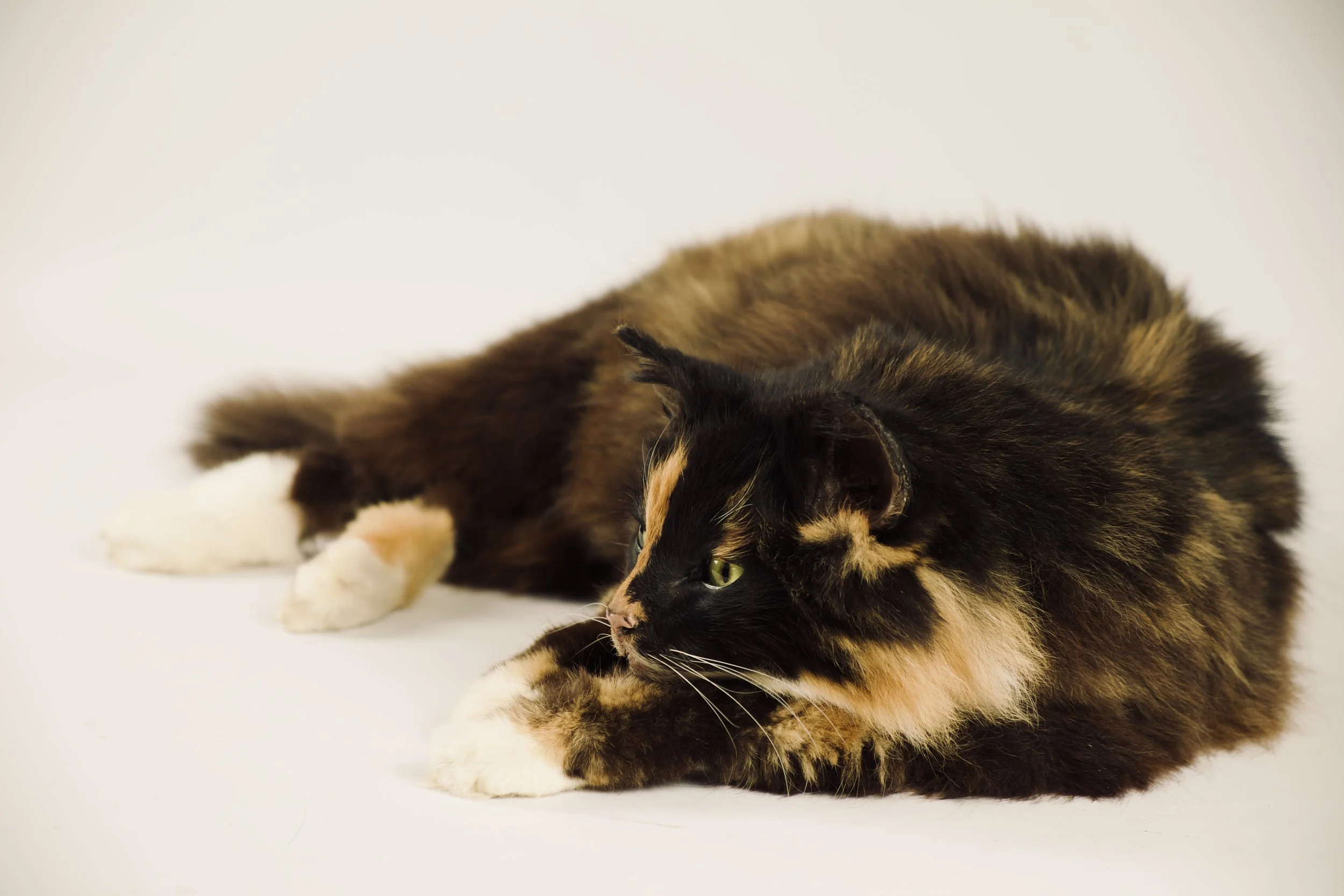
The bond with a pet is often incredibly close and precious. Consequently, their loss is a deeply personal and painful experience. In this context, a substantial question arises: What does it mean to have a deceased animal preserved? Is it a way of clinging to the past, or a method of letting go? Does it aid the grieving process, or does it hamper it?
This consideration touches on something fundamentally human: the desire to hold onto what we cherish - not just with our minds or hearts, but with our hands. In the search for a way to fill the void, the tangible presence made possible through taxidermy offers, for some, a bridge between the final farewell and a lasting memory.
The Tangible Memory
In many cultures, the body is not seen as an empty shell after death, but as a vessel of presence - a tangible relic of the life that was. Consider a lock of hair, ashes in an urn, a headstone in a cemetery, or a ring passed down through generations. Each object carries more than just physical material; it carries memory, emotion, and proximity.
A preserved animal can serve a similar purpose. Not as a decorative piece, but as a tangible presence - a silent beacon of connection. The reconstructed body thus becomes a mirror in which the past is briefly reflected.
The Paradox: The Presence of Absence
A taxidermied animal is still there, yet it is not. It is not alive, yet it is present. This paradox evokes a wide range of reactions. For some, it offers comfort: the familiar form, the posture, and the gaze that conjures memories of habits and personality traits. For others, the frozen form makes the absence all the more poignant.
Yet grief is precisely that: learning to live with contradictions - with the fact that love remains even as the physical body disappears. A preserved animal embodies this paradox, forcing us to pause at the transition from life to memory: a fragile boundary we often prefer to avoid.
Taxidermy as a Transformative Ritual
Grief is not a linear path. Philosophers like Freud and Derrida pointed out that mourning does not just take something from us; it shapes us. While Freud saw mourning as a "work" process that should lead to the detachment of emotional ties, Derrida emphasized that true mourning honors the eternal incompleteness and irreplaceable uniqueness of the other. There is no "end" to grief; it is a process of transformation.
Preserving an animal is, in itself, an act of transformation. It is not an attempt to pretend that death hasn't occurred, but an acknowledgment that it has - and that it was meaningful. In this way, taxidermy can become a ritual, a way to mark a transition, much like a funeral, a memorial service, or a farewell letter. It is not a matter of freezing the past, but of giving a new shape to something that will never be the same again.
A Personal Choice, Not Denial
There is no universally "right" way to grieve. What is healing for one person may feel suffocating to another. This is why the choice to preserve a pet must be made carefully and honestly: not out of denial, but from a desire to give the sorrow a place rather than pushing it away. Sometimes, a preserved animal is not a way of clinging to what is gone, but a form of love: a tribute to what once was.
Your Personal Choice
Death confronts us with questions that have no simple answers. Those who choose to have an animal preserved are not choosing to ignore the loss, but to give it a form that can provide comfort. That requires courage.
Considering taxidermy for a deceased pet brings much uncertainty; it is not a decision to be taken lightly. Ask yourself what you would want to feel later on. Would seeing your pet's form comfort you, or would it prevent you from moving forward?
Try to listen to your grief. Does it want to hold on, remember, transform, or let go? There is no universal answer - only what feels meaningful to you. And if you don't know yet, take your time. Grief follows no schedule. And love, even after death, never needs to hurry.